As the population ages, the importance of safety for seniors becomes increasingly critical. Wearable fall detection technology has emerged as a game-changer, offering peace of mind to both users and their families. These innovative devices can sense falls in real time, triggering alerts and ensuring timely assistance.
With advancements in sensors and algorithms, wearable fall detectors are becoming more accurate and user-friendly. They seamlessly integrate into daily life, allowing individuals to maintain their independence while enhancing their safety. By understanding the mechanics and benefits of these devices, families can make informed decisions that protect their loved ones from the risks associated with falls.
Overview of Wearable Fall Detection
Wearable fall detection devices utilize advanced technology to monitor users’ movements and detect falls in real time. These devices often integrate sensors such as accelerometers and gyroscopes, measuring body position and motion. When a fall is detected, the device triggers an alert that can be sent to emergency contacts or monitored services for immediate response.
Various types of wearable fall detection devices exist, including smartwatches, medical alert systems, and specialized fitness trackers. Smartwatches typically include additional features, such as heart rate monitoring and activity tracking, enhancing their appeal for seniors. Medical alert systems are specifically designed for fall detection and often include a help button for manual alerts.
The accuracy of these devices depends on the sophistication of their algorithms and sensor technology. Recent advancements have significantly reduced false alarms, ensuring that alerts are generated only during actual falls. Regular updates and software improvements further enhance reliability.
Wearable fall detection devices offer vast benefits for seniors and caregivers. They promote independent living by providing users with a sense of security and autonomy. Enhanced safety measures lead to improved quality of life, allowing seniors to engage in daily activities with confidence. Families gain peace of mind, knowing that immediate assistance is accessible if a fall occurs. Understanding the capabilities and benefits of these devices is essential when considering safety solutions for loved ones.
Technology Behind Wearable Fall Detection
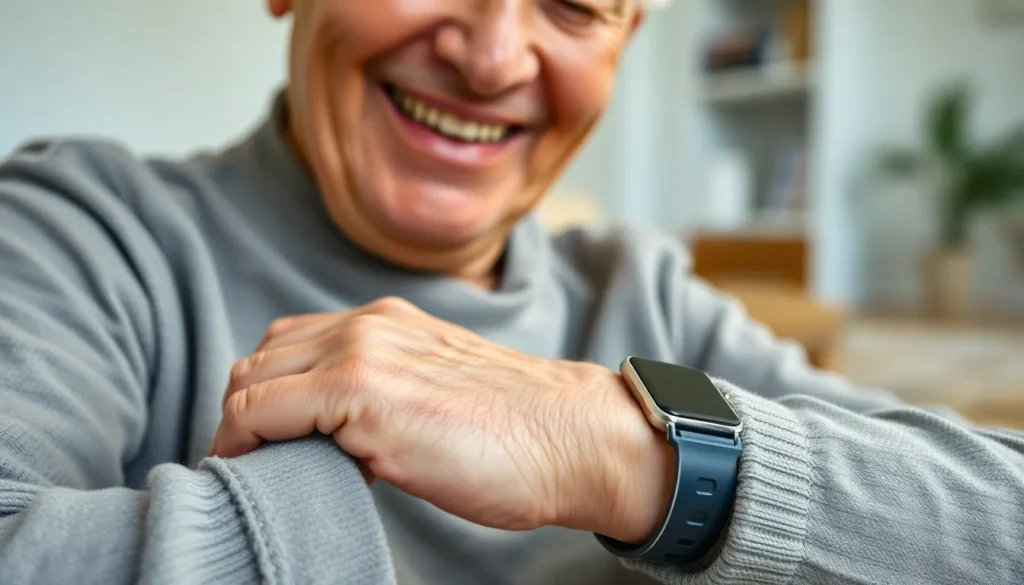
Wearable fall detection technology employs sophisticated sensors and algorithms to enhance safety for seniors. These innovations allow for accurate monitoring and timely alerts in the event of a fall.
Sensors and Devices
Wearable fall detection devices typically integrate a range of sensors, including accelerometers, gyroscopes, and magnetometers.
- Accelerometers measure changes in motion and can identify rapid movements that indicate a fall.
- Gyroscopes track orientation and rotation, assisting in distinguishing normal activities from falls.
- Magnetometers provide additional positioning data, contributing to a comprehensive assessment of the user’s movements.
Devices such as smartwatches, fitness trackers, and medical alert systems utilize these sensors, featuring unique functionalities tailored to user needs. Smartwatches might monitor heart rates while alert systems may include emergency contacts for immediate assistance.
Algorithms and Recognition
Advanced algorithms process data from the sensors, allowing for real-time analysis and response.
- Statistical algorithms learn patterns of regular activity, enabling them to differentiate between typical movements and potential falls.
- Machine learning models adapt over time, enhancing accuracy by incorporating user-specific data.
These algorithms minimize false alarms, ensuring alerts trigger only during genuine falls. Significant improvements in recognition accuracy boost confidence among users and their families, fostering independence while maintaining safety.
Benefits of Wearable Fall Detection
Wearable fall detection devices offer numerous advantages, significantly benefiting seniors and their caregivers. Here are the key benefits of these innovative technologies.
Increased Safety for Seniors
Increased safety for seniors is a primary benefit of wearable fall detection devices. These devices continuously monitor movement patterns, allowing for real-time fall alerts. When a fall is detected, the device sends an immediate alert to emergency contacts or services. This rapid response capability reduces the risk of severe injury from delayed assistance. Many devices also feature fall prevention reminders and activity tracking, encouraging physical fitness and reducing fall risks. Enhancing awareness of surroundings and promoting safer mobility leads to greater confidence in daily activities for seniors.
Peace of Mind for Caregivers
Wearable fall detection provides peace of mind for caregivers. Knowing a device can automatically notify help during emergencies alleviates anxiety for family members. This technology assures caregivers that their loved ones can maintain independence without compromising safety. Regular updates on activity levels and health statistics from the devices help caregivers monitor well-being remotely. Such insights enable proactive conversations about health and mobility, strengthening support networks and ensuring seniors remain connected to their care team. With effective fall detection, caregivers can confidently support seniors in their daily lives.
Challenges and Limitations
Wearable fall detection technology presents several challenges and limitations that can impact its effectiveness. Understanding these factors helps users and caregivers make informed decisions.
False Positives and Negatives
False positives and negatives pose significant challenges for wearable fall detection devices. False positives occur when the device mistakenly identifies a fall, resulting in unnecessary alerts. This can lead to alarm fatigue, where users become desensitized to notifications, potentially ignoring genuine alerts. Conversely, false negatives happen when a real fall goes undetected, delaying crucial assistance. Advanced algorithms help mitigate this issue, but achieving perfect accuracy remains a work in progress. Continuous improvements in technology and user feedback are essential for enhancing reliability.
Battery Life and Comfort
Battery life and comfort are critical considerations in the usability of wearable fall detection devices. Many devices require regular charging, which can be inconvenient for users, especially seniors who may forget to charge them. Insufficient battery life risks leaving users without protection during critical times. Comfort also affects wearability; devices that are bulky or uncomfortable may discourage consistent use. Manufacturers must prioritize sleek designs and long-lasting batteries to ensure that these devices remain a reliable safety solution for seniors.
Future Trends in Wearable Fall Detection
Wearable fall detection technology continues to evolve, driven by innovations that enhance user experience and safety. Emerging trends indicate a strong focus on integration with smart home systems and advances in artificial intelligence.
Integration with Smart Home Technology
Integration with smart home technology transforms wearable fall detection devices into central components of a comprehensive safety ecosystem. Devices can connect to home security systems, offering real-time alerts to family members or caregivers through smart speakers and mobile apps. For example, when a fall is detected, the system can automatically lock doors, turn on lights, or activate surveillance cameras, ensuring immediate assistance is available. This interconnectivity enhances overall security, allowing users to feel more at ease in their living environments while maintaining independence.
Advances in Artificial Intelligence
Advances in artificial intelligence significantly enhance the functionality of wearable fall detection devices. Machine learning algorithms analyze large datasets to improve fall detection accuracy, reducing instances of false alarms and ensuring timely responses. AI systems can learn individual movement patterns over time, adapting to varying user behaviors to distinguish between falls and routine activities. Furthermore, AI-powered analytics can provide users and caregivers with insights into activity levels and potential risks, facilitating proactive health and mobility measures. Continuous innovation in AI technology is poised to create smarter, more intuitive wearable fall detection devices that better serve seniors.
Wearable fall detection technology represents a significant advancement in senior safety. By combining sophisticated sensors with user-friendly designs, these devices empower seniors to live independently while ensuring help is readily available when needed. The ongoing improvements in accuracy and integration with smart home systems promise a future where safety and convenience go hand in hand.
As families consider options for protecting their loved ones, understanding the benefits and limitations of these devices is essential. Embracing this technology can lead to a safer environment for seniors, ultimately enhancing their quality of life and providing peace of mind for caregivers.