Donald Trump is a name that evokes a whirlwind of opinions and emotions. Love him or hate him, one can’t deny that his business ventures have been as colorful as his personality. But behind the glitzy towers and flashy branding lies a less glamorous truth: a string of failed businesses that could rival a soap opera plot twist.
Curious about just how many businesses have flopped under Trump’s watch? Buckle up, because the numbers might surprise you. From casinos that went bust to a line of steaks that never quite sizzled, these misadventures paint a picture of a businessman who’s faced more ups and downs than a reality TV star. Get ready to dive into the fascinating world of Trump’s entrepreneurial escapades, where success and failure dance a delicate tango.
Overview of Trump’s Business Ventures
Donald Trump’s business ventures span various industries, reflecting both ambition and missteps. In the real estate sector, he first gained attention through properties in New York City, where he developed high-profile buildings such as Trump Tower. Besides real estate, he ventured into entertainment, notably with the TV show “The Apprentice,” which cemented his celebrity status.
However, several of Trump’s businesses experienced significant challenges. Trump Airlines, launched in the 1980s, struggled to compete and ceased operations shortly after. Another venture, Trump University, faced lawsuits over misleading practices and subsequently shuttered. The stakes were high in the casino industry too; multiple Trump-branded casinos filed for bankruptcy, including the Trump Taj Mahal and Trump Plaza.
Trump’s venture into consumer products also encountered difficulties. The Trump Steaks brand never gained traction, falling short of expectations in a competitive market. Moreover, Trump Vodka, introduced in 2006, faced limited success and eventually disappeared from shelves.
Examining his golf course businesses reveals mixed outcomes. While some courses achieved acclaim, others underperformed financially. Various factors contributed to these outcomes, including market fluctuations and management decisions.
Trademarks and licensing agreements represent another aspect of his business model. Licensing his name to various products and ventures provided ongoing revenue, yet not all partnerships thrived. The dichotomy between lucrative deals and failed attempts underscores the complexity of Trump’s business landscape.
Through these ventures, a pattern emerges. Trump’s successes and failures illustrate the unpredictable nature of entrepreneurship. Each new endeavor offers insights into his business strategy and the dynamics of the market.
Major Business Failures
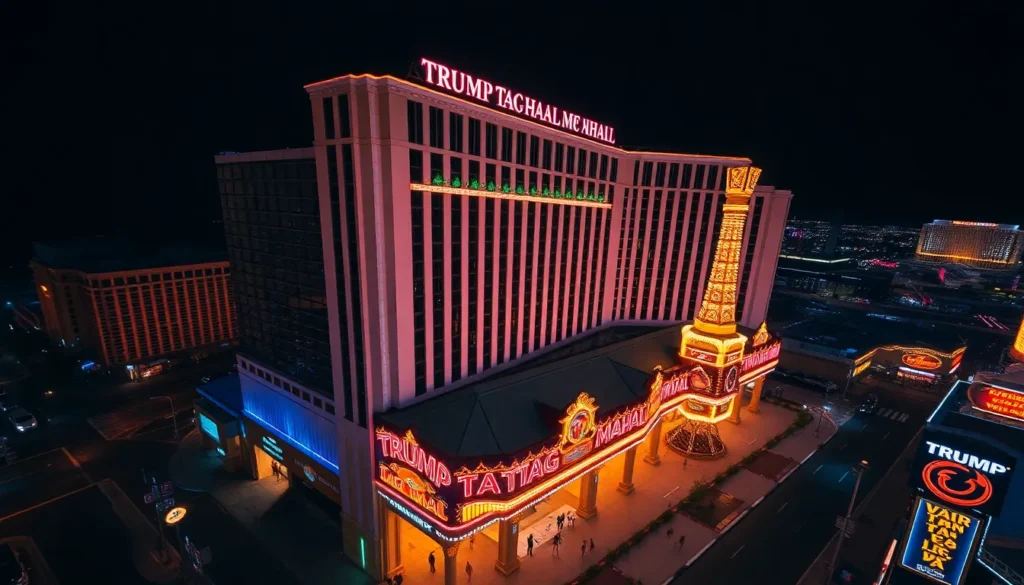
Donald Trump’s business endeavors include several notable failures, demonstrating the challenges of maintaining success in various industries.
Trump Hotels and Casinos
Trump’s ventures in the hotel and casino industry faced significant hurdles. The Trump Taj Mahal opened in 1990, only to file for bankruptcy in 1991 due to overwhelming debt. Trump Plaza and Trump Marina also entered bankruptcy, highlighting a turbulent trend. In total, four Trump-branded casinos declared bankruptcy in the 1990s and early 2000s. Despite his celebrity status, these ventures struggled to stay afloat in a competitive market. The financial strains exemplified the risks associated with high-stakes gambling and tourism.
Trump University
Trump University emerged in 2005 but soon faced extensive legal challenges. Critics alleged the institution misled students regarding real estate education and career advancement. Multiple lawsuits culminated in a settlement costing Trump $25 million in 2016. This outcome tarnished his brand, casting doubt on his expertise in education. Promising luxurious degrees but delivering disappointment marked its legacy. The fallout from this venture illustrates the consequences of mismanagement and deceptive practices in business.
Examination of Business Strategies
Donald Trump’s business strategies exhibit a blend of ambition and controversy, marked by notable risks and marketing efforts.
Risk Management
Effective risk management remained elusive in many of Trump’s ventures. Trump’s casinos faced substantial financial challenges, resulting in multiple bankruptcies. For instance, the Trump Taj Mahal declared bankruptcy just a year after its opening in 1990. Lack of contingency planning for economic downturns significantly impacted these enterprises. Trump’s approach often emphasized high-stakes investments without sufficient risk mitigation strategies. Consequently, unforeseen market changes led to drastic consequences for some businesses. Evaluating these risks requires understanding his decision-making under pressure. Poor financial forecasting worsened the circumstances of many failed businesses.
Marketing Approaches
Trump utilized various marketing approaches to enhance his brand and visibility. His celebrity status, amplified by “The Apprentice,” helped position his businesses in the spotlight. Strategic partnerships with celebrities bolstered brand recognition in consumer products like Trump Steaks. Bold advertising campaigns often accompanied these ventures. Engaging the public through social media expanded his reach significantly. However, some marketing efforts did not translate into sales success, especially for products like Trump Vodka. Continuous promotion of luxury and exclusivity characterized many marketing strategies. Emphasis on personal branding intertwined with business identity created lasting impressions.
Impact of Failures on Trump’s Brand
Failures have significantly affected Trump’s brand image. Each unsuccessful venture contributed to a complex narrative that juxtaposes ambition with controversy. The bankruptcies of his casinos—Trump Taj Mahal, Trump Plaza, and others—cast shadows on his reputation. Legal issues surrounding Trump University further damaged trust, resulting in a $25 million settlement.
Public perception shifted over time. Many viewed Trump’s failures as indicators of poor management and decision-making. Negative headlines and legal challenges influenced investor confidence and consumer trust. Brand loyalty waned as businesses faced financial difficulties.
Marketing strategies aimed at leveraging Trump’s celebrity status often fell flat. High-profile campaigns created initial buzz but did not guarantee sustained consumer interest or sales. Negative press overshadowed marketing efforts, making it challenging to regain a strong position in the market.
Resilience emerged as a recurring theme. Despite setbacks, Trump continued to pursue new ventures, showcasing his determination. Some successes, like his prolific real estate developments, briefly restored his image. Still, the shadow of previous failures lingered, complicating attempts at brand reinvention.
Long-term impacts are evident in both public and business realms. Investors became increasingly cautious, evaluating risks before engaging with Trump-related ventures. The cocktail of ambition, failure, and controversy crafted a unique business saga, establishing a complex legacy that continues to generate discussion.
Public Perception of Trump’s Business Record
Public perception of Trump’s business record varies significantly. Some view him as a savvy entrepreneur who capitalized on opportunities, while others focus on his numerous failures. Financial missteps, such as the bankruptcies of four casinos, showcase substantial challenges in his career. The Trump Taj Mahal, opening in 1990, declared bankruptcy within a year, highlighting rapid failures.
Critics point to Trump University as another major setback. Launched in 2005, it faced legal battles over claims of misleading students, culminating in a $25 million settlement that dampened his reputation. Each misadventure contributed to a narrative emphasizing questionable management practices.
Contrastingly, Trump’s successes in real estate, like Trump Tower, inject complexity into public opinion. These ventures have occasionally restored some trust among investors and consumers. The mixed outcomes of his golf courses demonstrate further discrepancies in performance. Some gained acclaim while others struggled, adding to the uncertainty surrounding his brand.
The perception of resilience plays a significant role in analyzing his business journey. Trump’s relentless pursuit of new opportunities, despite previous failures, impresses certain audiences. Nonetheless, the shadow of past bankruptcies persists, influencing how potential investors view future ventures. Continuous media coverage of Trump’s business dealings fosters ongoing interest and scrutiny.
Ultimately, the multifaceted nature of public perception creates a complex picture. Ambition, controversy, and resilience intersect in discussions about Trump’s business record, embodying the unpredictable landscape of entrepreneurship. Each venture, successful or not, contributes to a larger narrative about decision-making and the implications of failures on brand identity.
Trump’s business journey is a compelling mix of ambition and setbacks. His numerous failures in various industries paint a picture of a complex entrepreneur whose ventures often faced significant challenges. While his successes in real estate and television bolstered his public image, the shadow of bankruptcies and legal issues looms large.
These failures not only impacted his brand but also shaped public perception, creating a narrative that juxtaposes resilience with controversy. Despite the ups and downs, Trump’s relentless pursuit of new opportunities continues to captivate audiences. The ongoing interest in his business record highlights the unpredictable nature of entrepreneurship and the lasting effects of both triumphs and failures.