Autonomous robots are revolutionizing industries and reshaping the way humans interact with technology. These intelligent machines operate independently, using advanced algorithms and sensors to navigate their environments and perform tasks without direct human intervention. From manufacturing floors to homes, their applications are vast and varied, showcasing their potential to enhance efficiency and productivity.
As they become more integrated into everyday life, understanding the capabilities and challenges of autonomous robots is crucial. They promise to tackle mundane tasks and even complex problems, but ethical considerations and safety concerns also arise. Exploring the world of autonomous robots reveals not just their technological advancements but also the implications for the future workforce and society as a whole.
Overview of Autonomous Robots
Autonomous robots operate independently without human intervention. They leverage advanced algorithms and sensor technology to navigate and interact with their environments. Widely used in industries like manufacturing, healthcare, and logistics, these robots enhance efficiency, reduce costs, and improve safety.
Key Components:
- Sensors: Sensors collect data on various environmental factors, allowing robots to detect obstacles and assess their surroundings.
- Processors: Processors analyze sensor data and make real-time decisions, enabling robots to adapt to dynamic conditions.
- Actuators: Actuators execute the actions based on processing decisions, facilitating movement and interaction with objects.
Types of Autonomous Robots:
- Industrial Robots: Designed for repetitive tasks, such as assembly and material handling.
- Service Robots: Operate in public spaces, delivering services like cleaning and security.
- Mobile Robots: Navigate complex environments, often used for transportation or exploration.
Applications:
- Manufacturing: Enhancing production lines with precision tasks that reduce human error.
- Healthcare: Assisting in surgeries and patient care, improving operational efficiencies.
- Agriculture: Automating tasks like planting and harvesting, achieving higher yield rates.
Challenges:
- Safety Concerns: Ensuring the safe operation of robots, particularly in crowded environments.
- Ethical Considerations: Addressing moral dilemmas related to decision-making in autonomous systems.
- Integration with Workforce: Managing the shift in job roles and responsibilities as robots become prevalent.
Understanding the autonomous robots’ operational capabilities, challenges, and implications is crucial for industries aiming for smarter and safer environments.
Types of Autonomous Robots
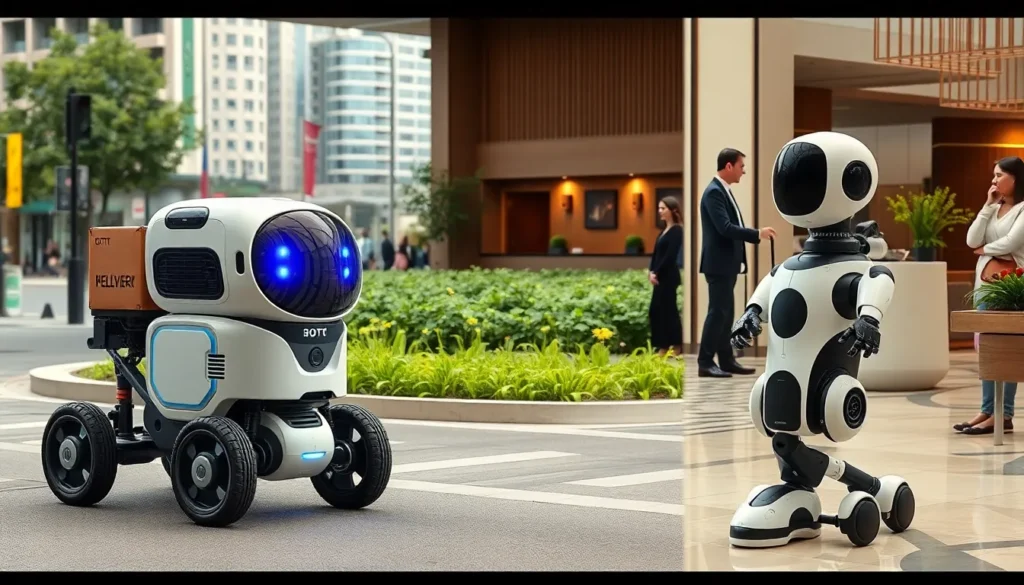
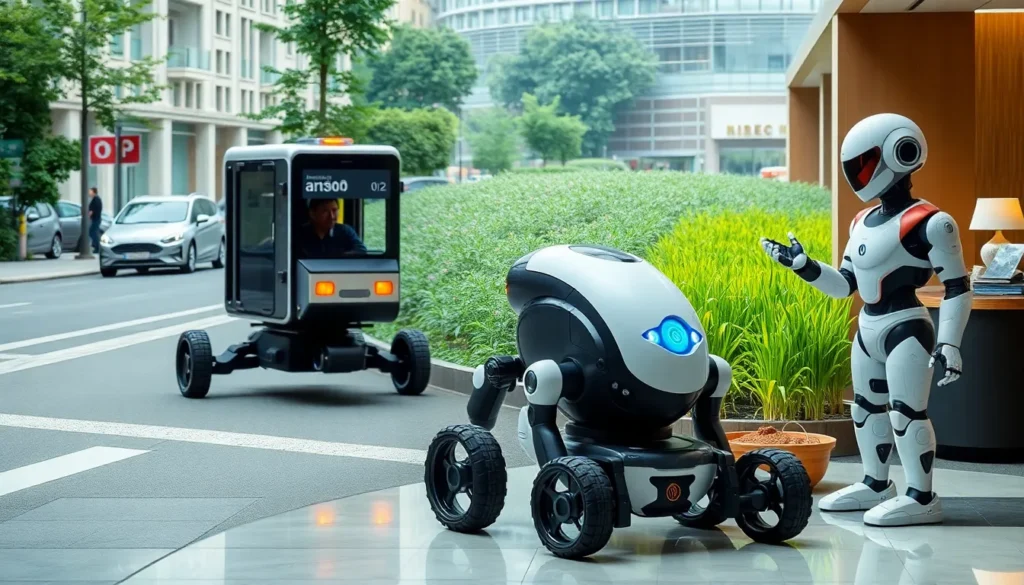
Autonomous robots come in various forms, each designed for specific tasks and environments. The following categories outline the primary types of autonomous robots and their functions.
Mobile Robots
Mobile robots navigate through environments without human intervention. They utilize sensors like LiDAR, cameras, and GPS for obstacle detection and mapping. Applications for mobile robots include:
- Delivery Robots: These robots transport goods in urban areas, carrying packages directly to customers’ doorsteps.
- Agricultural Robots: They’re used for tasks like planting, harvesting, and monitoring crops, enhancing efficiency in farming operations.
- Exploration Robots: Designed for remote environments, such as Mars rovers, they gather data in places unreachable by humans.
Industrial Robots
Industrial robots excel in manufacturing settings, performing repetitive and precise tasks. These robots typically integrate with production lines to optimize workflows. Their applications encompass:
- Assembly Robots: They assemble components in electronics and automotive industries, ensuring accuracy and speed.
- Welding Robots: Automated welding enhances safety and consistency, making it vital for structural construction.
- Inspection Robots: These robots inspect products for quality control, identifying defects that may escape human detection.
Humanoid Robots
- Service Robots: Used in hospitality, they assist guests, carry luggage, and provide information, improving customer experience.
- Healthcare Robots: They support medical staff by delivering supplies or aiding in rehabilitation exercises for patients.
- Educational Robots: Designed for learning environments, they engage with students, providing tutoring and interactive learning experiences.
Applications of Autonomous Robots
Autonomous robots demonstrate significant advancements in various sectors, enhancing productivity and efficiency. Key applications include manufacturing, healthcare, and agriculture.
Manufacturing
Autonomous robots revolutionize manufacturing processes through automation. Common applications include:
- Assembly Lines: Robots perform tasks such as assembling components with accuracy and speed.
- Welding: Robots execute precise welding tasks, reducing errors and improving product quality.
- Inspection: Robots conduct quality control checks, identifying defects that human inspectors might overlook.
These functions result in increased throughput and reduced labor costs, illustrating the crucial role of autonomous robots in modern manufacturing environments.
Healthcare
In the healthcare sector, autonomous robots improve patient care and operational efficiency. Significant applications include:
- Surgical Assistance: Robots assist surgeons in complex procedures, enhancing precision and reducing recovery times.
- Telepresence: Robots allow healthcare professionals to remotely diagnose and consult with patients, increasing accessibility.
- Medication Delivery: Robots automate the distribution of medications, minimizing human error in critical situations.
These applications lead to improved patient outcomes, illustrating how autonomous robots support healthcare providers.
Agriculture
Autonomous robots transform agriculture by increasing efficiency and sustainability. Key applications include:
- Crop Monitoring: Robots scan fields using sensors to assess plant health and detect diseases early.
- Seeding and Harvesting: Robots automate planting and harvesting crops, reducing the time and labor required.
- Weed Control: Robots apply precise treatments to manage weeds, minimizing pesticide use and environmental impact.
These innovations contribute to more productive agricultural practices, showcasing the vital role of autonomous robots in food production.
Advantages of Autonomous Robots
Autonomous robots offer distinct advantages across various sectors, enhancing efficiency, accuracy, and safety.
- Increased Efficiency: Autonomous robots operate continuously without breaks, maximizing productivity. In manufacturing, for example, they streamline assembly lines, reducing downtime and speeding up production cycles.
- Enhanced Accuracy: These robots perform tasks with precise adherence to specifications, minimizing errors. In healthcare, they assist in surgical procedures by ensuring accurate incisions, which reduces the risk of complications.
- Cost Reduction: Implementing autonomous robots lowers labor costs over time. By automating repetitive tasks in factories and warehouses, companies can reallocate resources toward more strategic functions while cutting expenses.
- Improved Safety: Autonomous robots reduce human intervention in hazardous environments, such as construction sites or disaster zones. Their ability to navigate dangerous areas mitigates risks for workers and enhances overall safety protocols.
- Scalability: Businesses can rapidly adjust operations by deploying more autonomous robots as needed. This flexibility supports growth without substantial increases in labor costs or training time.
- Data Collection and Analysis: Autonomous robots can gather and process vast amounts of data in real time. In agriculture, for instance, they monitor crop health and soil conditions, providing vital insights for informed decision-making.
- Enhanced Quality Control: Autonomous robots conduct inspections with consistent accuracy, ensuring high-quality standards in production. They identify defects that human workers may overlook, improving product reliability.
These advantages position autonomous robots as crucial assets in modern industry, encouraging further integration and innovation across sectors.
Challenges and Limitations
Autonomous robots face several challenges and limitations that impede their full potential in various applications. Addressing these issues is crucial for successful integration into industries.
- Safety Concerns: Autonomous robots often operate alongside humans, presenting safety challenges in dynamic environments. The risk of accidents increases in crowded spaces, necessitating advanced safety protocols and fail-safe mechanisms to mitigate hazards.
- Ethical Dilemmas: Decision-making in complex situations raises ethical questions. For instance, robotic systems must balance efficiency with moral considerations, especially in healthcare scenarios where decisions can impact patient outcomes.
- Technological Limitations: Current sensors and algorithms can struggle with unpredictable variables. Recognizing obstacles, navigating diverse terrains, or interpreting complex data remains a challenge, limiting the effectiveness of autonomous robots in unstructured environments.
- Integration into Workforce: The seamless integration of autonomous robots into existing workflows faces resistance from human labor forces. Job displacement fears hinder acceptance, requiring stakeholders to address workforce transition proactively.
- Cost of Development: Developing and maintaining advanced robots incurs significant costs, impacting widespread adoption. Although improved technologies promise efficiency gains, initial investments may deter smaller businesses from embracing automation.
- Legal and Regulatory Issues: The lack of comprehensive regulations surrounding autonomous robots creates uncertainty. Without clear legal frameworks, companies face difficulties in responsibility and liability matters, disrupting their operational strategies.
- Data Privacy Concerns: The data collection capabilities of autonomous robots may lead to privacy infringements. As these machines gather sensitive information, organizations must establish robust data protection measures to comply with privacy laws.
These challenges and limitations highlight the necessity for ongoing research and development, ensuring that autonomous robots can fulfill their transformative potential across industries while addressing the associated risks.