In a world where technology evolves at lightning speed, high-tech robots are leading the charge into the future. These sophisticated machines are transforming industries, enhancing productivity, and redefining the way humans interact with technology. From robotic arms in manufacturing to autonomous delivery drones, the applications of high-tech robots are as diverse as they are groundbreaking.
As society embraces automation, the capabilities of these robots continue to expand. They’re equipped with artificial intelligence, advanced sensors, and machine learning algorithms, allowing them to perform tasks that were once thought impossible. This article explores the fascinating realm of high-tech robots, delving into their innovations, challenges, and the profound impact they have on our daily lives.
Overview of High-Tech Robots
High-tech robots incorporate advanced technologies such as artificial intelligence, machine learning, and sophisticated sensors. These robots enhance productivity across multiple sectors, including manufacturing, healthcare, and logistics. With autonomous navigation systems, robots can perform complex tasks efficiently and accurately.
High-tech robots exhibit various forms, from industrial arms that assemble products to humanoid robots capable of interaction. Collaborative robots, known as cobots, work alongside human operators, streamlining workflows and improving safety in workplaces.
Robots in healthcare assist in surgery and patient care, utilizing precision and reliability. In agriculture, drones monitor crop health and assess field conditions, promoting sustainable practices. Logistics robots automate warehousing tasks, reducing operational costs and improving delivery speeds.
Despite their advantages, high-tech robots face challenges, such as workforce displacement and ethical concerns surrounding data privacy. Continuous advancements in robotics aim to address these challenges while maximizing benefits for industries and society.
Types of High-Tech Robots
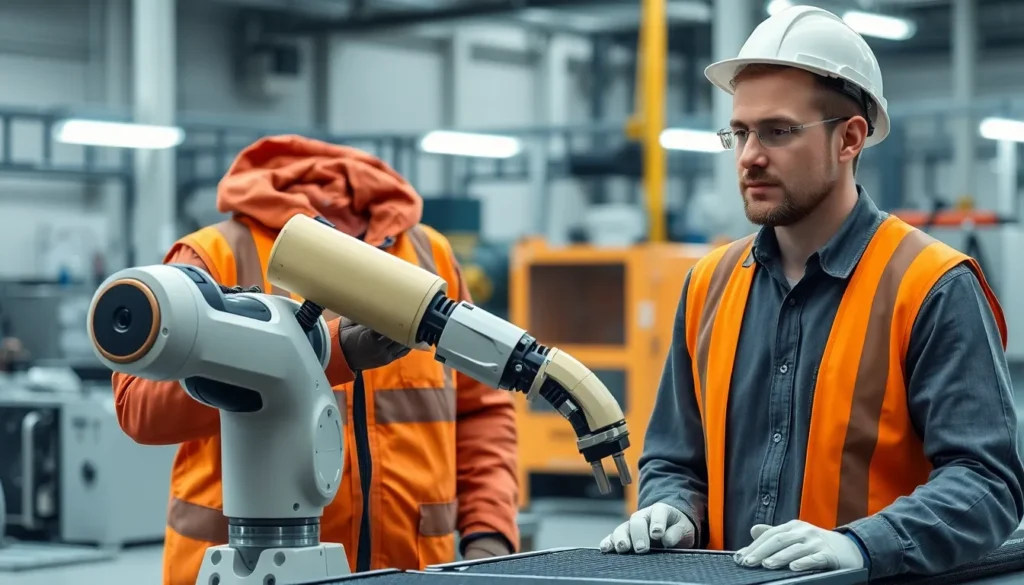
High-tech robots can be categorized into several types based on their applications and environments. Each type serves unique functions, enhancing efficiency and effectiveness in their respective fields.
Industrial Robots
Industrial robots dominate manufacturing environments, particularly for assembly line tasks. They excel in precision tasks such as welding, painting, and material handling, often operating with robotic arms that can perform repetitive movements with speed and accuracy. According to the International Federation of Robotics, the global stock of operational industrial robots reached 3 million units in 2021, reflecting their critical role in production processes. These robots provide increased productivity, reduced labor costs, and improved safety by taking over hazardous tasks.
Service Robots
Service robots assist with non-industrial applications, catering to both commercial and personal needs. In healthcare, service robots deliver medication, assist with rehabilitation, and support elderly care, enhancing quality of life and operational efficiency. In hospitality, autonomous robots manage room service, cleaning, and guest information inquiries. Research shows that the global service robot market is projected to grow from $37 billion in 2020 to $166 billion by 2025. This growth signifies the expanding reliance on technology to streamline services and improve user experiences.
Collaborative Robots
Collaborative robots, or cobots, work alongside humans in shared spaces, enhancing productivity without replacing human workers. They possess advanced sensors and safety features that allow them to operate safely near people. Cobots can adjust their movements based on human interactions, making them ideal for tasks requiring human oversight or assistance. Industries increasingly adopt cobots for assembly, packaging, and quality control, resulting in greater workplace efficiency and reduced physical strain on employees. The collaborative robot market is expected to exceed $12 billion by 2025, demonstrating their increasing value in modern workflows.
Applications of High-Tech Robots
High-tech robots play a vital role in numerous industries, enhancing efficiency and productivity through advanced technologies. Their applications span various sectors, including manufacturing, healthcare, and space exploration.
Manufacturing
Manufacturing relies heavily on high-tech robots for increased precision and efficiency. Robots perform tasks such as welding, painting, and assembly with exceptional accuracy. Common types of industrial robots include robotic arms for material handling, specialized machines for quality inspection, and flexible automation systems that adapt to production needs. Using robots in manufacturing reduces human error, cuts costs, and boosts production speeds.
Healthcare
High-tech robots are transforming the healthcare sector by improving surgical outcomes and patient care. Surgical robots, such as the da Vinci Surgical System, provide enhanced precision for minimally invasive procedures. Robots assist in rehabilitation, enabling patients to regain mobility through tailored exercises. Additionally, service robots help in patient monitoring and medication delivery, ensuring timely care. The integration of robotics in healthcare increases efficiency and elevates the overall quality of treatment.
Space Exploration
Space exploration benefits from high-tech robots designed for efficiency and safety in environments unfit for humans. Rovers, such as NASA’s Perseverance, explore planetary surfaces, conducting experiments and gathering data. Robotic arms on spacecraft perform delicate tasks involving assembly and maintenance, reducing astronaut risk. The use of robots streamlines missions, allowing for extended operations in space while providing critical insights into extraterrestrial environments.
Advantages of High-Tech Robots
High-tech robots offer numerous advantages across various sectors.
- Increased Efficiency: High-tech robots perform tasks faster than humans, with a typical cycle time reduction of 20% to 50% in manufacturing operations due to their speed and accuracy.
- Enhanced Precision: Robots execute tasks with high precision, reducing errors in operations such as welding, painting, and assembling. This precision lowers material waste and improves product quality.
- Improved Safety: By handling hazardous tasks, robots reduce workplace accidents. They perform dangerous jobs in environments such as construction sites and factories, minimizing risks to human workers.
- Cost Reduction: Implementing high-tech robots decreases labor costs and operational expenses. Companies can achieve a return on investment (ROI) within two to three years due to automated processes.
- 24/7 Operation: High-tech robots can operate continuously without fatigue, increasing output and allowing businesses to meet increased demand without extending operational hours.
- Scalability: Businesses can easily scale operations by adding more robots to meet changes in demand, ensuring flexibility in production processes.
- Innovative Problem Solving: Equipped with artificial intelligence, robots analyze data and optimize processes, enabling companies to innovate and adapt to evolving market needs.
- Enhanced Quality of Life: In healthcare, robots assist with patient monitoring and surgical procedures, improving patient outcomes and freeing healthcare professionals to focus on critical care activities.
High-tech robots significantly enhance productivity, reduce costs, and improve safety across industries, showcasing their vital role in modern technological advancements.
Challenges and Ethical Considerations
High-tech robots face various challenges and ethical considerations as they become integral to multiple industries. Safety concerns emerge regarding the interaction between robots and humans, particularly in collaborative settings. Robots equipped with advanced AI can make decisions autonomously. If these decisions lead to accidents, liability issues may arise.
Job displacement stands as another significant challenge. As robots automate tasks traditionally performed by humans, unemployment rates could rise in certain sectors. Manufacturing and service jobs are particularly vulnerable, causing economic and social implications for affected workers.
Data privacy also presents a pressing ethical concern. High-tech robots process vast amounts of data, including personal information. Ensuring that this data remains secure and is handled ethically becomes vital, especially in healthcare settings, where patient privacy is paramount.
Bias in algorithms is an additional challenge that cannot be ignored. AI systems learn from data, and if this data contains biases, it may result in skewed outcomes. This risk raises questions about fairness and equity in decision-making processes.
Transparency in robotic operations enhances trust between humans and robots. As robots make more autonomous decisions, understanding their reasoning becomes essential. Lack of clarity may lead to distrust and reluctance to integrate robots into daily life.
Regulation also plays a crucial role in addressing these challenges. Governments and organizations must craft policies that ensure the safe use of robots and address ethical considerations. Collaboration among stakeholders can facilitate guidelines that govern robot deployment while maximizing benefits and minimizing risks.
These challenges and ethical considerations underscore the need for ongoing discussions and developments in robotics, ensuring high-tech robots positively impact society while addressing potential pitfalls.
High-tech robots are reshaping industries and redefining human interaction with technology. Their ability to enhance efficiency and precision while addressing complex tasks makes them invaluable assets across sectors. As these machines continue to evolve, they promise to drive innovation and improve quality of life.
However, the rise of robotics brings challenges that warrant careful consideration. Issues like workforce displacement and ethical concerns around data privacy must be addressed to ensure a balanced integration into society. Collaboration among stakeholders is essential to create regulations that promote safe and responsible robot deployment.
The future of high-tech robots is bright, but it’s crucial to navigate the accompanying challenges thoughtfully. With ongoing advancements and a commitment to ethical practices, robots can pave the way for a more efficient and innovative world.